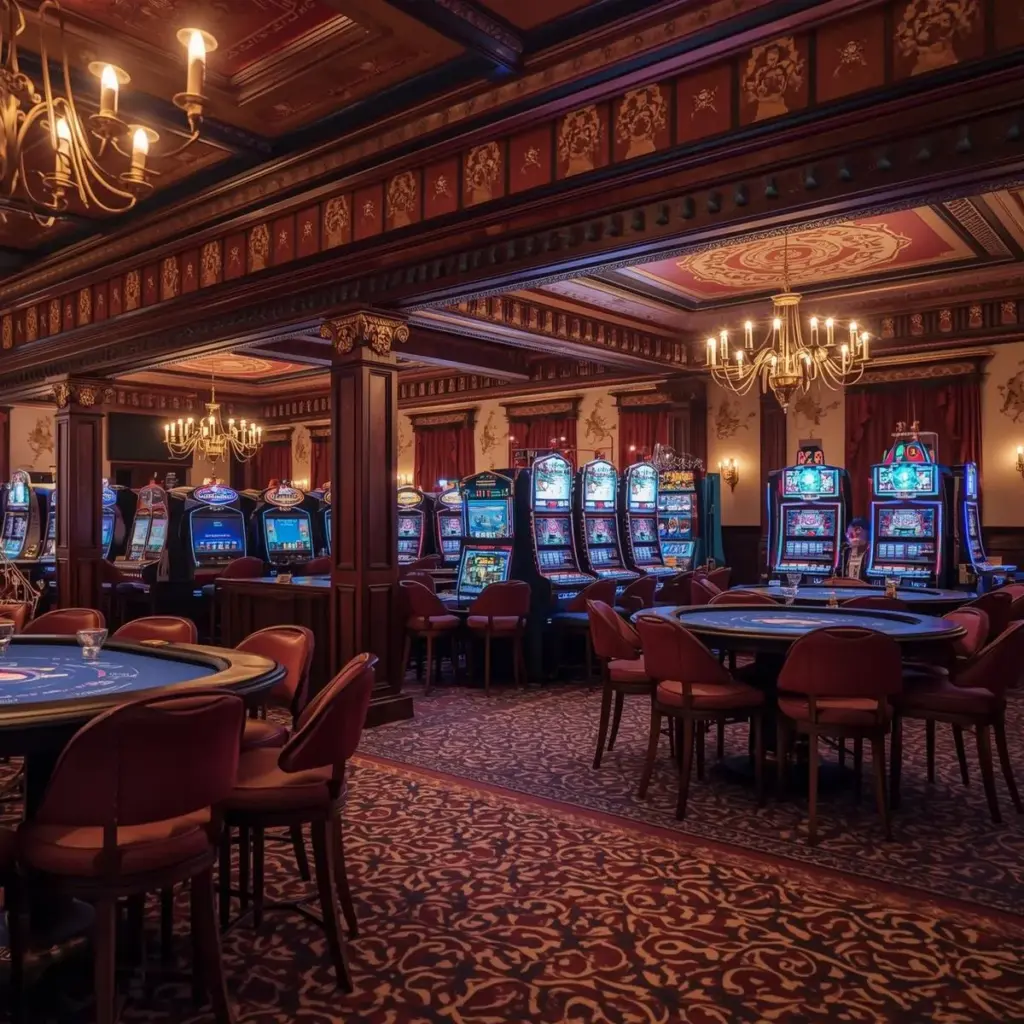
Hungary’s Casino Cap Creates Unique Land-Based Gaming Landscape
The 14-Casino Ceiling That Reshaped Eastern Europe’s Gaming Scene
Hungary’s gaming landscape operates under one of Europe’s most restrictive regulatory frameworks, with legislation capping the total number of land-based casinos at just 14 establishments nationwide. This artificial scarcity has created a fascinating economic experiment that’s reshaping how operators approach market expansion in Central and Eastern Europe. Unlike neighboring countries where casino proliferation has been largely market-driven, Hungary’s approach has generated intense competition for limited licenses while simultaneously driving innovation in both land-based and digital offerings.
The ripple effects extend far beyond Hungary’s borders. Operators who’ve mastered the art of maximizing revenue within these constraints are now applying similar strategies across the region, while international brands are rethinking their expansion playbooks. For players seeking alternatives, platforms like National Casino have emerged to fill gaps in the market, offering comprehensive gaming experiences that complement the limited land-based options.
The current regulatory framework, established in 2013 and refined through subsequent amendments, has created what industry analysts describe as a “pressure cooker environment” where only the most efficient operators survive. This has led to some of the highest revenue-per-square-meter figures in Europe, with Hungarian casinos generating an average of €3,847 per square meter annually as of 2026 data, compared to the European average of €2,156.
Revenue Concentration Creates Gaming Powerhouses
The mathematics of Hungary’s casino limitation are stark and revealing. With approximately 9.7 million residents and 14 casinos, the country operates with roughly one casino per 692,000 people – a ratio that makes Las Vegas look oversaturated by comparison. This concentration has forced operators to think vertically rather than horizontally, maximizing every aspect of their operations rather than relying on geographic expansion.
According to data from the Hungarian Gaming Board, the top three casino operators control 67% of the market’s total gaming revenue, with the leading operator alone accounting for €186 million in gross gaming revenue during 2025. This level of concentration is unprecedented in European gaming markets, where typically the top three operators control 35-45% of market share.
“The Hungarian model has created what we call ‘destination casinos’ rather than convenience gambling,” explains Dr. Márta Kovács, Senior Gaming Economist at the Budapest Institute for Economic Research. “Players travel further and stay longer, which fundamentally changes the economics of casino operations. We’re seeing average session lengths of 4.2 hours compared to 2.1 hours in markets with higher casino density.”
This extended engagement model has influenced everything from floor design to hospitality offerings. Hungarian casinos now feature some of Europe’s most sophisticated entertainment complexes, with integrated restaurants, hotels, and conference facilities becoming standard rather than luxury additions.
Geographic Monopolies Drive Innovation Pressure
The regional distribution of Hungary’s 14 casinos has created de facto geographic monopolies that would be impossible in more liberalized markets. Six casinos operate in Budapest, while the remaining eight serve the entire countryside – an arrangement that gives each rural operator exclusive access to catchment areas of 400,000-800,000 potential customers.
This geographic protection has paradoxically driven innovation rather than complacency. With no direct local competition, operators must compete on experience quality and customer retention rather than location convenience. The result has been a arms race in customer experience technology, with Hungarian casinos leading Europe in adoption of biometric player tracking, AI-powered game recommendations, and integrated mobile applications.
The Debrecen Casino, serving Hungary’s second-largest city, exemplifies this trend. Despite being the only casino within a 150-kilometer radius, it has invested €12 million in facility upgrades since 2024, including Europe’s first fully automated poker room and a virtual reality gaming lounge. “When you can’t compete on convenience, you must compete on experience,” notes casino manager Péter Szabó.
Rural operators have become particularly creative in customer acquisition, with some offering helicopter transfers for high-value players and others partnering with regional tourism boards to create gaming-centered vacation packages. These strategies would be economically unviable in saturated markets but make perfect sense when you’re the only game in town – literally.
Cross-Border Spillover Effects Reshape Regional Markets
Hungary’s restrictive casino policy has created significant spillover effects in neighboring countries, particularly Slovakia, Romania, and Austria. Border regions in these countries have experienced casino construction booms as operators seek to capture Hungarian players willing to travel for gaming options.
The Austrian town of Nickelsdorf, just 15 kilometers from the Hungarian border, now hosts three major casinos within a 5-kilometer radius – a concentration that exists solely to serve Hungarian customers. Weekend traffic data shows that 73% of players at these establishments hold Hungarian identification, generating an estimated €45 million annually in cross-border gaming revenue that Hungary’s restrictive policies have effectively exported.
“We’ve essentially created a gaming tourism industry by accident,” observes János Fekete, former Director of the Hungarian Gaming Authority. “Hungarian players are spending their gaming budgets in neighboring countries, which defeats the original policy objective of controlling gambling’s social impact while maximizing tax revenue.”
This cross-border leakage has prompted policy discussions about potentially increasing the casino cap, though political resistance remains strong. The current coalition government has indicated that any expansion would require comprehensive social impact studies and could not exceed 20 total licenses – still among Europe’s most restrictive frameworks.
Digital Displacement Accelerates Online Adoption
Perhaps the most significant unintended consequence of Hungary’s casino limitations has been the acceleration of online gambling adoption. With limited land-based options, Hungarian players have embraced digital platforms at rates significantly above European averages. Online casino revenue in Hungary reached €298 million in 2025, representing 34% of total gaming revenue compared to the EU average of 23%.
This digital shift has created opportunities for both licensed Hungarian operators and international platforms. The country’s online licensing regime, while separate from land-based casino regulations, allows for significantly more operators – currently 47 licensed online gambling providers serve the Hungarian market as of early 2026.
The demographic data reveals interesting patterns: players aged 25-40 show the highest propensity for online play, with 67% reporting regular digital gambling activity compared to 23% for land-based casino visits. This suggests that Hungary’s restrictive land-based policies may be inadvertently creating a generation of digital-first gamblers.
Mobile gambling has seen particularly explosive growth, with smartphone-based gaming revenue increasing 156% between 2024 and 2025. The convenience factor that land-based casinos cannot provide due to geographic limitations has made mobile platforms the preferred choice for casual gaming sessions.
Economic Efficiency Metrics Challenge Expansion Logic
From a pure economic efficiency standpoint, Hungary’s casino limitation policy has produced remarkable results that challenge conventional wisdom about market liberalization. The country’s 14 casinos generated combined gross gaming revenue of €547 million in 2025, translating to an average of €39.1 million per establishment – nearly double the European average of €21.3 million per casino.
Employment efficiency metrics are equally impressive. Hungarian casinos employ an average of 127 full-time equivalent workers per establishment, generating €308,000 in gaming revenue per employee annually. This compares favorably to more liberalized markets like the Czech Republic, where casinos average €186,000 in revenue per employee.
Tax revenue concentration has also exceeded government projections. The 14 casinos contributed €164 million in gaming taxes during 2025, representing 0.31% of total government revenue from just 0.0014% of the country’s business establishments. This tax efficiency has made casino operators politically valuable despite ongoing social concerns about gambling expansion.
“The numbers don’t lie – Hungary has created one of Europe’s most economically efficient gaming markets,” states Dr. Elena Rossi, Gaming Industry Analyst at the Vienna Institute for Economic Studies. “The question isn’t whether the policy works economically, but whether the social and competitive trade-offs are worth the efficiency gains.”
Future Expansion Scenarios Face Political Headwinds
Despite economic arguments for expansion, political momentum for increasing Hungary’s casino cap remains limited. The ruling Fidesz party has consistently positioned itself as protective of traditional values, viewing casino expansion as potentially contradictory to its social conservative agenda. Public polling data from late 2025 shows only 31% support for increasing the number of casinos, with 52% opposing expansion and 17% undecided.
However, economic pressures are mounting. The cross-border revenue leakage to neighboring countries has reached an estimated €180 million annually, representing significant lost tax revenue and employment opportunities. Additionally, the European Union’s increasing focus on single market principles may eventually challenge Hungary’s restrictive licensing framework as a barrier to free trade in services.
Industry insiders suggest that any future expansion would likely follow a regional quota system, potentially allowing 2-3 additional casinos in underserved areas while maintaining the overall restrictive approach. Such a compromise could address the most egregious geographic gaps while preserving the economic concentration that has made existing operators so profitable.
The timeline for any policy changes remains uncertain, with the next comprehensive gaming law review scheduled for 2027. Until then, Hungary’s unique casino landscape will continue serving as a real-world laboratory for the effects of artificial scarcity in gambling markets – providing valuable lessons for regulators and operators across Europe and beyond.